by newschoolsyr | May 3, 2017 | 2016-2017, grade 2, grade 3, grade 4, language arts
This unit was started by our student teacher this past fall. After she left, we slowly have been finishing up what she started. Each student picked a topic that they knew “all about” and started writing about that topic. Topics include, cheetahs, NASA,...
by newschoolsyr | Mar 15, 2017 | 2016-2017, grade 4, grade 5, math
Students in fourth and fifth grade have been learning about fractions over the past five weeks. Throughout these five weeks students have learned how to make equivalent fractions, simplify fractions, compare fractions, and order fractions. Throughout the unit the...
by newschoolsyr | Nov 27, 2016 | 2016-2017, grade 2, grade 3, grade 4, language arts, Lemoyne Student teacher
In a series of three lessons the 2nd, 3rd and 4th grade students learned about four different parts of speech. First they learned the function of verbs in the English language and that every English sentence must contain at least one verb. Then we practiced enhancing...
by newschoolsyr | Mar 21, 2016 | 2015-2016, grade 2, grade 3, grade 4, grade 5, Social Studies
Students in Second Grade through Fifth Grade have been learning about the different aspects of Ancient Indian culture. With our student teacher, Erica, they learned about the different foods that were eaten in Ancient India, as well as the social Caste System that was...
by newschoolsyr | Apr 9, 2015 | 2014-2015, grade 2, grade 3, grade 4, language arts, language arts phonemic awareness
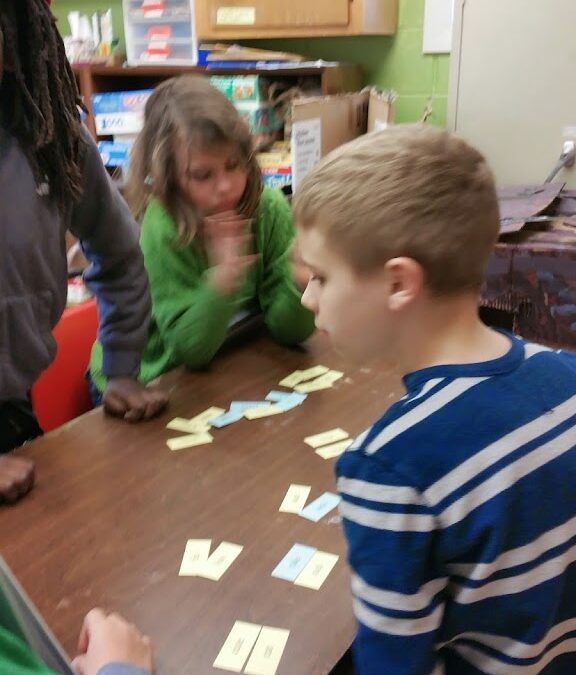
Students in dictation class have been focusing on reading and spelling words that follow the vowel-consonant-e pattern and comparing them with words that follow the consonant-vowel-consonant pattern. Students sort, compare, read, and write words and...
by newschoolsyr | Mar 28, 2015 | 2014-2015, grade 3, grade 4, math
A group of seven 3rd and 4th graders have been learning all about multiplication and division this winter. With multiplication, they started with cluster problems which break large problems such as 358×27 into small clusters of easily known...